Do you have low spots, uneven areas, or imperfections on your garage floor? If so, you are probably wondering, “Can you use self-levelling underlayment in a garage, and if so, under what conditions?” There are certain scenarios when it is acceptable to use, but not all garage floors are ideal candidates. Using the wrong product or installing it incorrectly will result in early failure. Let’s take a closer look so you can avoid costly mistakes.
If you’re planning to install a coating system on your garage floor, improve drainage, or just want a nicer surface in general you may be wondering how self-leveling products will perform.
What Is Self-Leveling Underlayment?
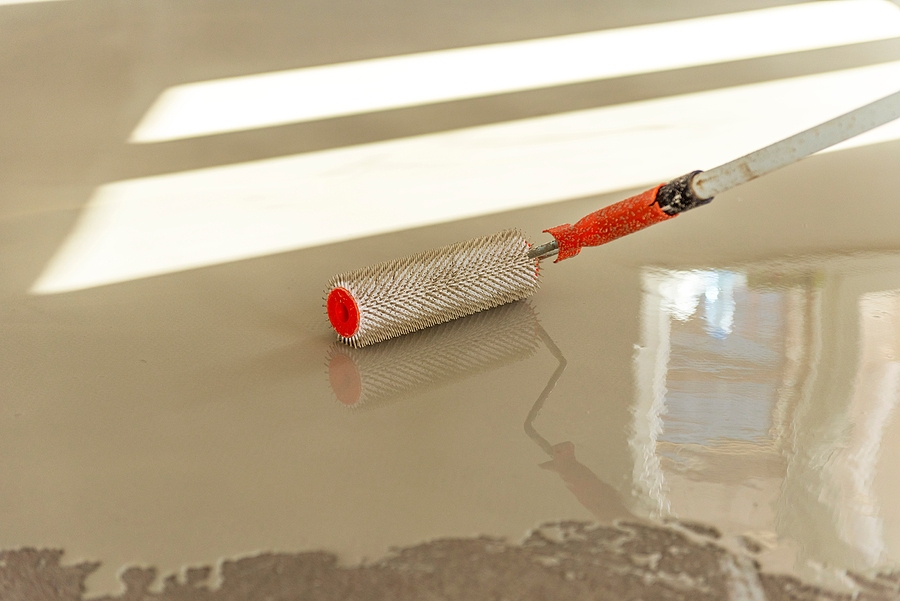
Self-leveling underlayment is typically a cement-based product that is mixed with water. It flows out and levels itself, as the name suggests, to create a smooth, flat floor.
It’s poured onto the surface instead of being troweled and spreads evenly to fill in low areas without manual intervention. This makes it ideal for correcting surface imperfections.
Self-Leveling products are typically used indoors under tile, vinyl flooring, carpet, or hardwood. But some types are made specifically for industrial and garage applications.
Not all self-leveling products are made the same, so it’s important to choose the right one for your garage project.
Can Self-Leveling Underlayment Be Used in a Garage?
Yes, self-leveling underlayment can be used in a garage as long as the product you choose is rated to handle the conditions on the floor. Garages take on many different stresses that indoor rooms do not.
Traffic from cars and trucks, tire pressure, moisture, freezing and thawing, chemicals, and heavy loads can all destroy a garage floor if it’s not prepared for those conditions. Standard self-leveling products meant for indoors are typically not designed to handle these.
Products made for garage floors are usually heavy-duty and cementitious. They can withstand vehicle traffic and harsh conditions.
When applied to a structurally sound concrete slab, self-leveling underlayment can smooth out imperfections and prepare a floor for coatings or polishing.
What Conditions Must Exist Before Self-Leveling Underlayment Is Installed?
Your concrete floor must be stable, clean, and in good condition before using a self-leveling product. Self-leveling is not designed to fix structural problems with your floor. Putting a self-leveling product over cracked or unstable concrete will usually lead to the new material cracking or separating from the existing slab.
Conditions you want to look for include:
- Stable concrete that isn’t moving
- No excessive settlement
- Existing structural cracks have stopped moving
- Positive drainage
- Enough strength in the existing concrete
- Clean surface free of oils and contaminants
One of the most important aspects of the job is professional surface preparation.
Can Self-Leveling Underlayment Fix Structural Problems?
No, self-leveling underlayment will not solve structural problems on your garage floor.
Homeowners sometimes make the mistake of thinking that because self-leveling can make their floor perfectly smooth it can solve any problem. Unfortunately, that’s not the case.
Typical problems that will require additional repair include:
- Significant settlement
- Foundation Issues
- Large Cracks
- Concrete heaving up
- Major Vertical Movement
- Unstable soil under the slab
These issues should be repaired before self-leveling or any other garage floor product is applied.
What Types of Garage Floor Problems Can Self-Leveling Underlayment Correct?
Self-leveling concrete works best for problem areas on the surface of your floor. It can help smooth out minor imperfections.
Some examples include:
- Low spots
- Birdbaths
- Slight waviness
- Shallow Surface cracks
- Cosmetic unevenness
- Prep for coatings
- Prep for polishing
The goal isn’t always to make your garage floor perfectly flat but to provide a smoother surface.
Is Surface Preparation Important Before Installation?
Yes, surface preparation is critical. If your garage floor isn’t prepared correctly, any flooring product you apply will fail.
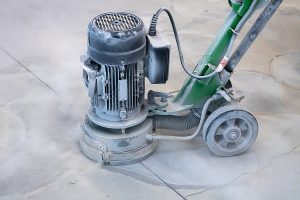
Concrete often has contaminants that prevent coatings from bonding. Contractors will typically:
- Remove existing coatings and sealers
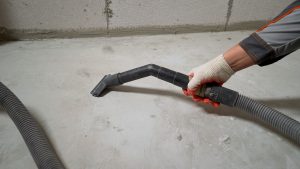
- Clean the floor and remove any oil or grease
- Repair cracks (if needed)
- Grind the surface
- Apply profile
- Apply a primer recommended by the coating manufacturer
Failure to prepare the surface can cause bubbles, delamination, cracking, and many other problems.
Can Self-Leveling Underlayment Be Used Under Garage Floor Coatings?
Yes, self-leveling underlayment is commonly used to prepare garage floors before coatings are applied.
Applying a garage floor coating over smooth perfectly leveled concrete makes the coating look amazing. Self-Leveling can fix those hard-to-reach low spots and inconsistencies on your floor before the coating is applied.
Self-leveling is used under many different types of coatings, including:
- Epoxy Coatings
- Polyaspartic Coatings
- Decorative Flake Coatings
- Industrial Floor Coatings
- Polished Concrete
As long as the self-leveling product is compatible with the coating you plan to apply.
Is Professional Installation Worth It?
Professional installation is definitely recommended. Many homeowners think they can save money by installing self-leveling underlayment themselves.
Garage floor leveling is more than just pouring a product on the floor. Many things need to happen to ensure the job is successful.
Preparing the surface, testing for moisture, crack evaluation, product selection, proper mixing techniques, and application methods all play a role.
Experienced concrete contractors know how to identify problems with your floors. They will be able to tell you if self-leveling is right for your garage or if something else will work better.
How Long Does Self-Leveling Underlayment Last in a Garage?
Self-leveling underlayment can last for years if applied correctly. Like any garage floor product, its life expectancy will depend on a few factors.
- Quality of product installed
- Surface preparation
- Moisture conditions
- Traffic levels
- Environmental conditions
- Maintenance
It can last just as long as the rest of your garage floor when paired with the right coatings or finishing system.
Can You Use Self-Leveling Underlayment in a Garage, and If So, Under What Conditions?
You can use self-leveling underlayment in your garage when the concrete is stable, uncontaminated, and the product is designed for your floor’s conditions. Self-Leveling is great for fixing low spots, minor unevenness, and general surface imperfections. Self-leveling underlayment cannot be used to fix structural issues with your garage floor.
Custom Concrete Prep and Polish will evaluate your garage floor to decide what the best repair and leveling methods are. We can prepare your surface, make concrete repairs, level your floor, polish it, or install a coating. Contact us to learn more about your options.