
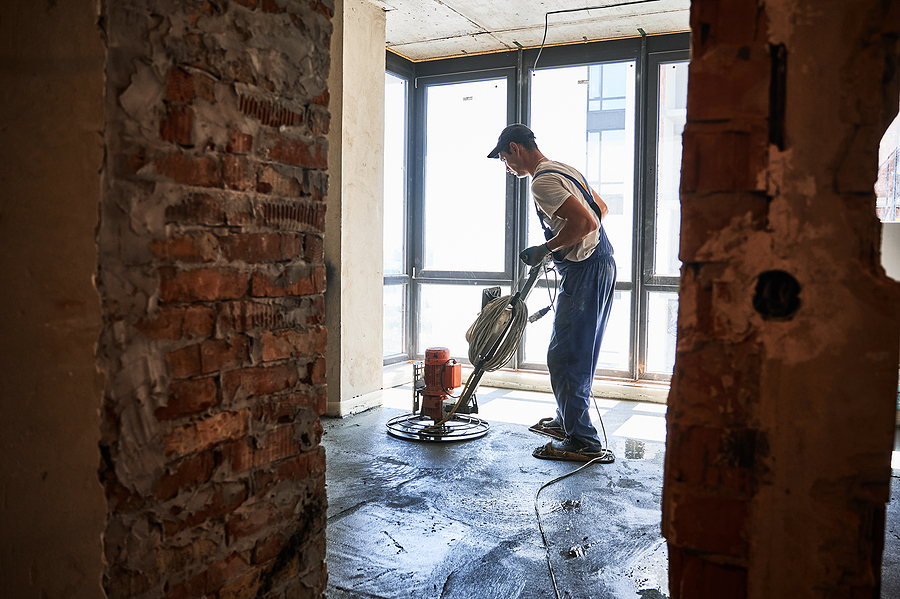
Planning a concrete floor project often raises one key question early in the process: how much will it really cost? Budgeting custom concrete floor finishing can feel uncertain when pricing varies widely, and unexpected issues arise after work begins. The good news is that with the right approach, concrete floor finishing costs can be forecast accurately and managed without unpleasant surprises.
Understanding what drives pricing, what can change costs mid-project, and how to plan allows property owners to make informed decisions and protect their budgets.
Why Concrete Floor Finishing Costs Vary
Concrete floor finishing is not a one-size-fits-all service. Pricing depends heavily on the condition of the existing slab, the size of the space, and the desired finish. Two floors with the same square footage can have very different costs based on surface condition alone.
Factors such as cracks, surface damage, moisture issues, and previous coatings all influence labor, equipment time, and materials. Higher-gloss polished finishes or specialty coatings may also require additional steps that affect overall pricing.
Understanding these variables is the first step in budgeting custom concrete floor finishing accurately.
The Importance of Evaluating the Existing Slab
One of the most common reasons projects exceed initial budgets is insufficient evaluation of the existing concrete. Slabs that appear acceptable at first glance may hide issues such as surface weakness, moisture vapor transmission, or embedded contaminants.
A thorough assessment allows contractors to identify repairs, mitigation steps, or prep work before pricing is finalized. This proactive approach reduces the risk of change orders once the project is underway.
When budgeting custom concrete floor finishing, slab condition matters just as much as square footage.
Key Cost Components in Concrete Floor Finishing
Concrete floor finishing cost typically includes several core components. Surface preparation is often the largest variable. Grinding depth, crack repair, joint treatment, and removal of coatings all affect labor and time.
Materials also influence cost. Densifiers, sealers, coatings, and polishing compounds vary depending on performance requirements and aesthetic goals. Equipment usage and crew time are additional factors that scale with project complexity.
By understanding these components, property owners can better interpret estimates and compare options realistically.
How Finish Selection Affects Budget
The type of finish selected has a direct impact on concrete floor finishing cost. A matte or low-sheen finish typically requires fewer polishing steps than a high-gloss polished surface. Decorative finishes or specialized coatings may introduce additional material and labor costs.
Performance requirements also play a role. Floors designed for heavy industrial use may need additional densification or protective treatments, while retail or office environments may prioritize appearance and reflectivity.
Clear communication about how the space will be used helps ensure the finish aligns with both performance needs and budget constraints.
Avoiding Mid-Project Cost Increases
Unexpected costs often arise when issues are discovered after work begins. Moisture problems, hidden damage, or incompatible previous treatments can force changes in process and materials.
The most effective way to avoid surprises is early testing and evaluation. Identifying potential challenges upfront allows them to be included in the original scope and budget rather than addressed later at additional cost.
Transparent estimates that outline assumptions and contingencies also help set clear expectations from the start.
Budgeting for Downtime and Scheduling
Cost is not limited to labor and materials. Downtime can be a significant factor for commercial spaces. Extended closures or phased work may affect operations, revenue, or tenant access.
Planning the project timeline carefully helps minimize disruption. In some cases, finishing can be scheduled in stages or during off-hours to reduce operational impact.
Considering scheduling alongside concrete floor finishing cost provides a more accurate picture of the total project investment.
Long-Term Value vs. Upfront Cost
While initial price matters, long-term performance should also factor into budgeting decisions. A lower upfront cost may lead to higher maintenance expenses or earlier refinishing if the system does not match the environment.
Well-planned custom concrete floor finishing extends slab life, reduces maintenance, and improves durability. Over time, this can lower the total cost of ownership and deliver better value.
Balancing upfront investment with long-term benefits is a key part of budgeting for custom concrete floor finishing responsibly.
The Role of Professional Guidance
Experienced contractors help eliminate uncertainty by explaining pricing drivers clearly and recommending solutions that fit both performance needs and budget limits. Professional assessment ensures that estimates reflect real conditions rather than assumptions.
Working with a knowledgeable team also helps property owners avoid unnecessary upgrades or under-specified systems that could lead to premature wear.
Expert guidance transforms budgeting from guesswork into a controlled planning process.
Plan With Confidence From the Start
Concrete floor finishing does not have to come with financial surprises. With proper evaluation, clear scope definition, and realistic expectations, budgeting custom concrete floor finishing becomes a straightforward process.
Understanding concrete floor finishing cost drivers allows property owners to plan accurately, protect their investment, and achieve durable, high-quality results.
To discuss your project and receive a clear, reliable estimate, schedule a consultation today. Starting with the right information is the best way to finish your concrete floors on budget and without surprises.