
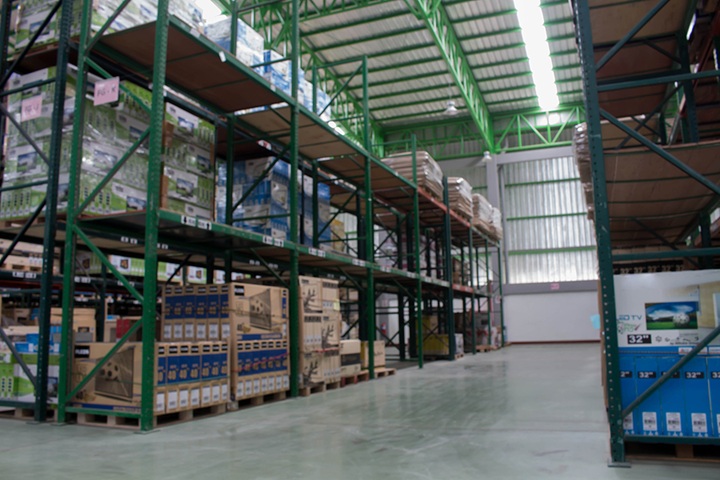
Cold storage floors are a different animal. A standard warehouse epoxy install might look perfect at 70°F and fail miserably when you put it in a cooler, freezer, or cold room that cycles through washdowns, defrost, and temperature swings. The challenge isn’t just “it’s cold.” It’s condensation risk, slower cure, thermal shock, and the fact that cold rooms are often food-adjacent spaces where cleanability matters.
So when we talk about industrial epoxy application methods for cold storage, we’re really talking about controlling the environment, prepping the slab correctly, and choosing an installation approach that matches how the facility actually operates. Done right, cold room concrete floor coatings can be tough, seamless, and easier to keep sanitary. Done wrong, they blister, haze, or delaminate when the room returns to service.
Why Cold Storage Epoxy Installs Fail More Often
Two issues keep popping up: condensation and cure.
Condensation happens when the slab temperature is too close to the dew point. Moisture forms on the concrete (sometimes you can’t even see it), and epoxy doesn’t bond well to “invisible water.” Multiple industry references point to a common rule: keep the surface temperature at least 5°F above the dew point during prep, application, and cure.
Cure is the other issue. Epoxy chemistry slows down as temperatures drop. Euclid Chemical notes a rule of thumb that for every 18°F drop below 70°F, cure time can double—meaning what’s “overnight” at room temp can become “days” in a colder environment if you don’t plan for it.
Method 1: The “Warm Shutdown” Install (Best When You Can Take The Room Offline)
If the facility can shut refrigeration down and let the space come up to a controlled temperature, this is usually the cleanest, most reliable method.
The goal is to create stable conditions long enough to prep, install, and cure the system without chasing moisture on the slab. That means controlling air temperature, humidity, and dew point, not just blasting heaters for an hour and hoping for the best. Sherwin-Williams specifically emphasizes that resinous flooring typically cures best at “room temperature,” and also provides guidance on using dew point calculations to avoid coating into condensation risk.
Prep matters just as much as the temperature. For most resinous systems, you want a concrete surface profile that the coating can actually bite into. ICRI’s CSP scale (CSP 1 through CSP 10) is widely used to specify that roughness. ICRI Sherwin-Williams’ concrete surface prep guide commonly calls for CSP ranges depending on coating thickness (for example, many 15–40 mil systems call for CSP 3–5).
Once the slab is profiled and cleaned, the system build is typically primer to epoxy body coat to broadcast/media (if needed for traction) to topcoat. In food-related areas, the floor also needs to be smooth and easily cleanable (while still allowing anti-slip applications when safety calls for it).
Method 2: The “Cold-Cure System” Install (When You Can’t Warm The Space Much)
Some operations can’t fully shut down refrigeration, or they can only warm the room slightly. In those situations, the method shifts from “warm the environment” to “use a system designed to cure in colder conditions” and be very strict about dew point control.
Manufacturers offer cold-cure epoxy options intended for lower-temperature installs, and Sherwin-Williams discusses cold-temperature epoxy installation as a specific use case where room-temp curing isn’t possible.
The practical keys here are material conditioning and timing. Epoxy gets thicker in cold temperatures, so mixing, spreading, and leveling all change. You also have to plan longer cure windows (again, cold slows cure). And because the environment is often right on the edge of condensation, the “surface at least 5°F above dew point” rule stops being a suggestion and becomes the whole job.
This method is common for cold room concrete floor coatings in coolers that run in the 35–45°F range, where specialized systems can still cure without needing to bring the space all the way up to normal indoor temps.
Method 3: The “Phased Work Zone” Install (Airlocks, Small Sections, Tight Controls)
In busy facilities, you’ll sometimes see a phased approach: build a temporary partition, create a controlled work zone, and install in sections while the rest of the cold storage remains operational.
This method lives or dies on containment and humidity control. Every time warm, humid air enters a cold room, the dew point picture changes, and condensation can appear quickly on cold surfaces. That’s why dew point monitoring is referenced as critical across prep, application, and cure, not just at the start of the day.
Phased work is slower, but it can be the only realistic option when downtime costs are huge.
Method 4: Epoxy Mortar And Rebuild Systems (When The Slab Is Beat Up)
Cold storage slabs often have joint damage, spalls, and impact wear from pallet jacks and forklifts. In those cases, the “best application method” may start with rebuilding the surface before you ever think about a thin coating.
Epoxy mortar or higher-build epoxy systems can restore the surface and create a more uniform substrate, which helps the finished coating perform more consistently. This is also where you pay extra attention to edges, drains, transitions, and joint detailing, because those are the spots that fail first in wet, cold, high-traffic environments.
What “Best” Usually Means For Cold Storage Floors
Most cold storage facilities want the same outcomes: seamless or near-seamless performance, solid traction (especially at entries and wet zones), and a surface that stays easy to clean. FDA Food Code language around floors being smooth and easily cleanable, while allowing anti-slip applications for safety, fits the reality of these environments.
But the “best” method depends on whether you can warm the room, whether the refrigeration can be shut down, and how aggressive the traffic and washdown schedule is. In many cases, it’s not one trick; it’s stacking smart decisions: CSP profile that matches the system, dew point control, correct cure planning, and the right materials for the operating temperature range.
Need Help Picking The Right Cold Storage Coating Plan?
Custom Concrete Prep & Polish (CCPP) installs epoxy coating systems and handles the surface prep work that determines whether a coating bonds and lasts. If you’re planning cold room concrete floor coatings, or you’re comparing industrial epoxy application methods for cold storage. Reach out to learn more.