Concrete floors rarely stay untouched for decades. Over time, small cracks get filled, low spots are patched, and repairs are made to keep floors usable. While those fixes may solve short-term problems, they often create long-term leveling challenges when it’s time to refinish or level the floor properly.
For property owners and facility managers, old floor patches and concrete leveling are one of the most common and frustrating issues encountered during concrete prep. What looks flat on the surface can behave very differently once grinding or leveling begins.
Why Old Floor Patches Create Problems
Old floor patches were usually installed to address a specific issue at a specific time. The problem is that patching materials don’t always age the same way as the original slab.
Concrete and patch compounds can differ in:
- Hardness and density
- Moisture absorption
- Expansion and contraction rates
- Bond strength to the original slab
Over time, these differences become more pronounced. When leveling work begins, patched areas may grind faster or slower than the surrounding concrete, making it difficult to achieve a uniform surface.
This mismatch is one of the biggest leveling challenges professionals encounter on older floors.
Uneven Wear and Hidden Transitions
Many older floors contain multiple layers of patching from different time periods. Some patches may be decades old, while others were added more recently. Each layer reacts differently during surface preparation.
As grinding exposes these areas, transitions between original concrete and patches can become visible or uneven. Even if the floor appeared level before work began, these inconsistencies often reveal themselves mid-process, requiring additional correction.
This is why old floor patches and concrete leveling can never be approached as a simple skim-and-go job.
Moisture Complications in Patched Areas
Older slabs often lack modern vapor barriers, and patch materials can respond to moisture differently than the surrounding concrete. Some patches trap moisture. Others allow it to migrate unevenly through the slab.
When leveling compounds or finishes are applied without addressing this issue, failures can occur. Delamination, bubbling, or cracking may show up weeks or months later, even if the floor initially looked perfect.
Moisture testing and surface evaluation are essential steps when dealing with old patches, especially in older commercial or industrial buildings.
Why Grinding Alone Isn’t Enough
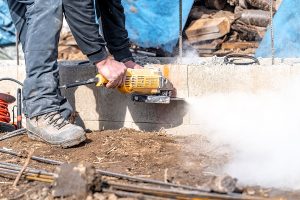
A common misconception is that aggressive grinding will “solve” patch-related issues. In reality, grinding can actually make problems worse if it isn’t carefully controlled.
Softer patch materials may grind down faster, creating dips. Harder patches may resist abrasion, leaving high spots behind. The result is a floor that looks inconsistent and requires additional leveling work to correct.
Addressing these leveling challenges requires more than equipment. It requires experience in reading the slab and adjusting the approach as conditions change.
Proper Evaluation Makes the Difference
Successful leveling starts with understanding what’s already on the floor. That means identifying where patches exist, how thick they are, and how they’re bonded to the slab.
An experienced contractor evaluates:
- Patch locations and composition
- Height differences between patched and original areas
- Signs of previous moisture movement
- Structural cracks versus cosmetic repairs
This information guides the leveling strategy and prevents surprises once work begins.
Why Experience Matters with Old Floor Patches
Every patched floor tells a story, and no two are exactly alike. That’s why experience is critical when addressing old floor patches and concrete leveling.
This is where Custom Concrete Prep & Finish provides real value. Their team understands how older patches behave during grinding and leveling, and they tailor preparation methods to the conditions of each slab. By identifying potential issues early, they help clients avoid costly rework and achieve flatter, longer-lasting floors.
Leveling Is a Process, Not a Shortcut
Old patches don’t mean a floor can’t be leveled or finished successfully. They simply mean the process needs to be done correctly. Rushing through preparation or ignoring underlying conditions often leads to poor results that don’t hold up over time.
By addressing leveling challenges at the slab level, rather than covering them up, finished concrete floors perform better and last longer.
Planning to Level or Refinish an Existing Concrete Floor?
If your floor has a history of patching and repairs, expert evaluation is essential before leveling or finishing begins. Contact Custom Concrete Prep & Finish today to assess your slab and get a concrete leveling solution designed to handle old floor patches and deliver long-term performance.