Yes! Grinding a ridge along a concrete control joint does not automatically create a weak spot in the slab if the grinding is limited to removing high surface area. However, your contractor should first evaluate why the ridge exists to determine how much concrete to remove safely.
A slight ridge along the surface is not the same as having structural movement through the slab. Grinding can fix the former issue but may only mask the symptoms of the latter.
Why Does a Ridge Form Along a Concrete Control Joint?
Curling concrete edges are the most common cause of a ridge along a control joint. The ridge may also result from inconsistent finishing along the joint, joint spalling, joint patch material drying higher than the surrounding floor, differential settlement, or movement between two adjoining slab sections.
Slab edges do not always dry at the same rate from top to bottom. If the top dries first, it shrinks faster than the bottom. The concrete edges near the joint may curl upward when the bottom continues to support its original position.
ACI indicates that curling is most often a problem at construction joints, saw cut joints, and free edges of slabs. Curling may also reduce contact area at the bottom of the slab nearest the joint.
That leads us to another point. The first step should always be a proper evaluation, not grinding.
Does Grinding the Ridge Automatically Weaken the Slab?
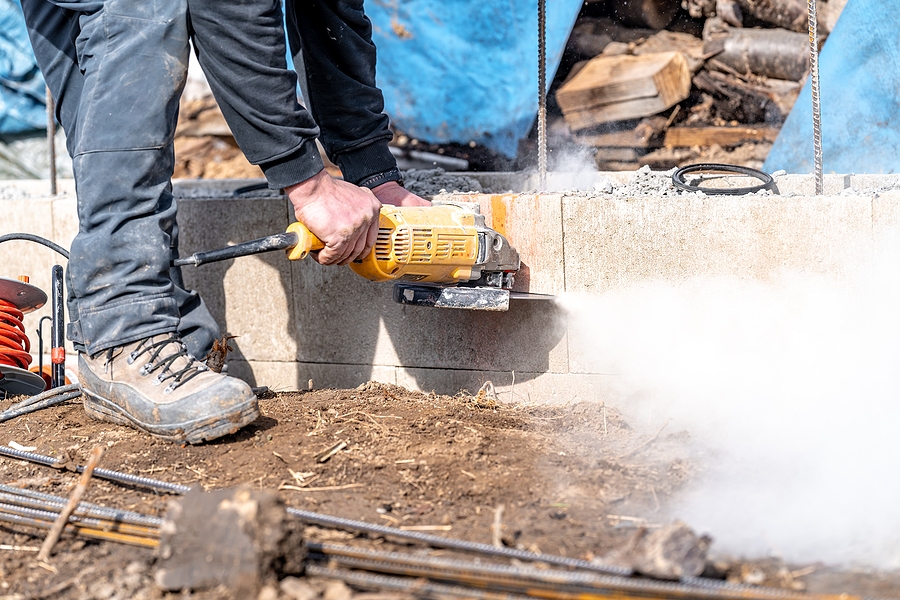
Not necessarily. Concrete grinding contractors routinely remove high spots on floors without creating weak spots. Grinding can remove surface coatings, glue residue, finishing lines, marks, minor floor defects, and elevation differences along joints.
Too much removal will weaken the concrete. The question is how far down the grinder must go. Is the tool only removing a fraction of an inch from the surface? Or will it need to cut into the slab to significantly reduce thickness, expose reinforcement, reduce concrete cover over joint dowels, or create a narrow depression along the joint?
Contractors use professional concrete grinding equipment and methods to remove high spots before installing the next flooring system. Custom Concrete Prep & Polish’s floor leveling services even combine grinding with filling operations when a floor needs overall correction, not just spot grinding.
Ideally, floor repairs and concrete preparation correct the overall plane without unnecessarily removing good concrete.
How Much of a Joint Ridge Can Be Ground Safely?
No single grinding depth will be safe for every control joint condition. Acceptable removal varies based on slab thickness, overall ridge height, reinforcement placement, joint details, traffic, and floor finish.
To decide how much material to remove, your contractor might use a straightedge, laser, or elevation map to see whether the ridge is part of a larger slab issue. Sometimes you can blend small ridges into the surrounding floor with a gradual transition over several feet.
Gradual grinding raises the overall repaired area. Aggressive grinding right beside the sawcut joint increases the risk of creating a trough, exposing large aggregate particles unevenly, or thinning joint edges so they’re more prone to damage.
The contractor may decide that too much removal is required. Sometimes another repair method is recommended, or an engineer should evaluate the slab before grinding too much concrete off the surface.
Can Grinding Fix Concrete Slab Curling?
Grinding can correct elevation changes caused by stable curling. However, grinding cannot undo the shape change that has already occurred in the slab.
After grinding, the floor will probably feel flat underfoot even though support is still reduced under the slab edges.
ACI also points out that curled slab edges may no longer contact the subbase. Movement downward from the weight of forklifts, pallet jacks, vehicles, or people will not be solved by grinding the top surface alone.
If the joint opens when loads pass over it and moves back to its original position when loads are removed, that hints the floor may move under your flooring system too. Remember, it happens under warehouse traffic but not always in a residential basement.
Stable joints with minor curling may be appropriate for grinding. Moving joints that bounce up and down under load, independently of each other, may require joint repair, stabilization techniques, filling the joint, or another fix based on the cause of the damage.
How Can You Tell Whether the Ridge Is Only a Surface Problem?
Visible defects near the joint indicate that more than grinding may be required. Surface grinding is more likely to be appropriate when the ridge is the only issue, the joint edges don’t move under pressure, and only small amounts of concrete are removed.
A decent assessment will also look for:
- crumbling or joint edges
- vertical movement when vehicles or people cross the joint
- hollow-sounding areas or loss of support near the joint
- wide cracks or cracks that change size under load
- exposed reinforcement bars or joint dowels
- moisture or other contaminants beneath previous patching or grinding ridge that travels through several connected joints
- height differences between adjacent panels
Your contractor may need to rebuild the joint prior to final grinding if there is significant damage. Patching material will not properly bond to weak or loose concrete because it will rely on that same weak surface area to stay in place.
Repairing thin leveling layers that chip off the concrete slab was recently discussed on Custom Concrete Prep & Polish’s blog. In short, remove loose concrete until you reach solid, stable concrete. Then you can work on the entire surface.
Should the Control Joint Be Filled After Grinding?
Yes…and no. Cleaning and filling the joint are options after grinding when the flooring system and expected traffic require it. However, don’t cover the control joint with new material that prevents it from doing its job.
Control joints, also known as contraction joints, give concrete beams, walls, and slabs places to crack. ACI reminds contractors that the timing of saw cuts is critical since they must be completed before random cracks form.
After grinding, contractors may fill saw-cut joints with a semi-rigid joint filler to support the edges as hard-wheel traffic crosses the slab. Joint filler materials come in flexible and semi-rigid options manufactured specifically for concrete control joints.
Joint filler material should complement the floor’s movement, traffic, temperature fluctuations, coating, polishing requirements, and more. A warehouse floor polished for shine and durability has different needs than an outdoor sealant.
Will Grinding a Joint Ridge Affect Polished Concrete?
Yes, grinding can affect polished concrete because it may expose more aggregate in the corrected area. Polishing hides nothing by covering concrete with an opaque layer. Instead, polishing refines the concrete itself.
Patterns in aggregate exposure due to patching, joints, cracks, different finishing methods, grinding or cutting the slab, and repairs will often still be visible.
Custom Concrete Prep & Polish’s overview of the different levels of polished concrete shows how many steps it takes to achieve the finished result. Grinding the slab smooth, patching floors, repairing cracks, densifying, or stressing the concrete can affect the final appearance as much as choosing the right polishing steps.
Have the contractor grind a small test area so you can see how the ground ridge will look when polished. That also applies to any joint filler material used in the repair.
Why Is Surface Preparation Important Around the Joint?
Remove all previous coatings, buildup, or weak concrete before installing patches, coatings, overlays, or polishing concrete. Doing so creates a stable, clean surface for new material to bond to or be refined.
Joint edges may require additional preparation, such as cleaning, cutting, or rebuilding after grinding. Remove dust and other loose particles before applying repair materials, since they will not adhere to an unstable base.
Our article on surface preparation for polished concrete explains joint cleaning, crack repair, and rebuilding damaged edges. The proper prep depends on whether the floor will be polished concrete, coated, covered with an overlay, or if another flooring system is installed.
When Should You Avoid Grinding the Ridge?
Joint movement, settlement, loss of support under the slab near the joint, deep spalling (chipping), or other structural issues may require additional support than grinding alone can provide. Avoid grinding high spots where too much concrete removal will expose reinforcement or dangerously reduce slab thickness.
Will the floor continue to move after grinding? Curled slab edges that are ground down may revert to their original shape as they dry or as settlement continues. Horizontal movement at a control joint may require joint stabilization instead of grinding.
Your contractor should explain these risks before starting work. Sometimes grinding is perfectly acceptable. Other times the slab needs joint repair, patching, an underlayment product to spread out loads, or an engineer’s review.
Can You Grind a Concrete Control Joint Ridge Without Creating a Weak Spot?
Yes, most of the time you can grind a ridge along a concrete joint without creating a weak spot. But don’t remove concrete until you measure the ridge and properly evaluate the joint. Contact Custom Concrete Prep & Polish to discuss your floor condition and learn how grinding, joint repair, or another surface-preparation method can fit your needs.