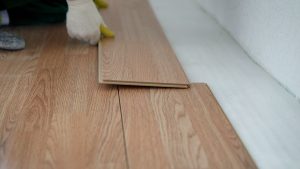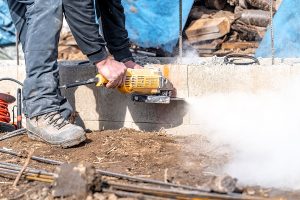
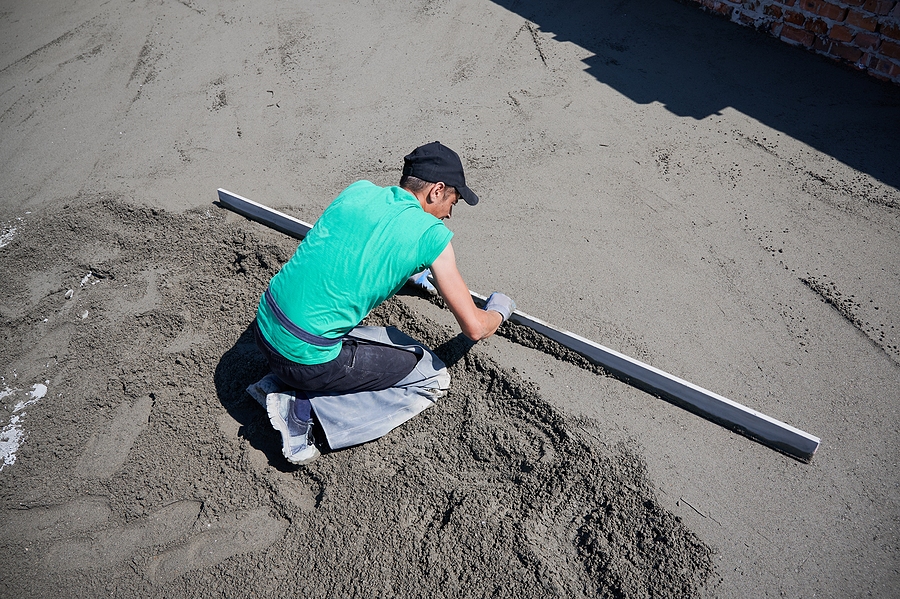
When should you use sand topping mix versus concrete patch on basement floors? Use sand topping mix for larger repairs or when adding buildup over a broad area. Use concrete patch when repairing shallow damage, feathering edges, filling chips and divots, or making localized corrections.
That is the simple answer, but you can’t choose the right bag by product name alone. Patch is a category that contains different formulations with unique depth limits, working times, preparation methods, and approved uses.
What Is Sand Topping Mix?
Sand topping mix contains Portland cement and graded sand, but not the larger coarse aggregate found in regular concrete mix. This fine aggregate lets it handle placements that are too thin for concrete but too deep for a skim-coat product.
QUIKRETE states its Sand/ Topping Mix is a mixture of Portland cement and commercial-grade sand. It’s used to repair large cracks and install thick beds for tile, among other intended uses.
QUIKRETE further recommends combining one of its products with Sand Mix and Acrylic Fortifier at thicknesses ranging from about 3/8 inch to one inch. That range only applies to the particular manufacturer’s system. Do not assume every sand topping mix can be applied at the same thickness.
The point is sand topping mix rarely works well when feathered down to nothing. It typically requires enough body to remain bonded and achieve design strength.
What Is a Concrete Patching Product?
Concrete patch is meant to fill damaged, absent, or low spots in an existing concrete slab. Some products handle feather-edge repairs while others are approved for use several inches thick.
Rapid Set floor patch, for example, is approved for feather-edge applications up to three inches thick. Rapid Set cement all, also a repair material, is approved for feather-edge repairs up to four inches thick. These products show that patch does not equal a specific thickness or performance tier.
Other patch products use polymer modifiers to improve adhesion in thin repairs. Other patches are fast-setting, structural repair mortars. Lightweight patches, skim coats, moisture-resistant patches, and patches intended specifically for use under resilient floor coverings are also available.
Check out Custom Concrete Prep & Polish’ article entitled, Best Concrete Repair Product for Thin Basement Floor Patches to learn more about each of these patch options. The application, finished floor, slab condition, and manufacturer’s instructions should help you choose the proper product.
When Is Sand Topping Mix the Better Choice?
Sand topping mix works well when repairing or building up an area too large or too deep to repair with other products. Common examples include large depressions, damaged concrete sections, and areas that need added depth before installing another flooring system.
For example, a basement floor might have a low area measuring three-quarters of an inch down from the perimeter floor. Installing a properly bonded sand topping system over the entire section might make more sense than filling it with a premium feather-edge patch.
Installing sand topping mix at the correct thickness can also create a sloped repair intended to direct water toward a drain. Self-leveling underlayment cannot be sloped without special ingredients or equipment.
However, you cannot simply place a sand topping mix and expect it to find its own level. You must screed it or otherwise finish it at the required elevation.
When Is Concrete Patch the Better Choice?
Concrete patch is the better choice for filling small holes, spalls, chipped slab edges, surface divots, low spots that do not extend across a large area, and patches that must taper into the existing floor. A patch can also remove isolated defects prior to installing LVP, carpet, tile, coatings, or other finishes.
Possible applications for patch include:
- Repairing small holes caused by plumbing or utility installations
- Shallower damage left after removal of old flooring
- Areas cut into the slab by adhesive removal equipment
- Craze crack edges or control joints that have chipped
- Isolated low areas found near doorways and transitions
- Feathering around larger patches that do not need covering
- Areas outside flooring flatness tolerances that are localized or small enough to patch
Product selection is important even when choosing patch materials. Rapid Set floor patch requires removal of materials that might prevent bonding to the concrete. The list includes oil, mastics, wax build-up, dirt, and loose debris.
Does your project require featheredge patches? You can place a floor patch from featheredge up to three inches. Don’t forget: moving joints and cracks must still be respected. Fill those first with a compatible material.
Why Shouldn’t You Feather Sand Topping Mix to Nothing?
Sand topping mix is too thick to feather down to nothing unless the manufacturer’s instructions specifically allow it. Sand and cement typically need thickness to develop strength and stay bonded to the slab.
An edge that is too thin will dry faster than the rest of the repair. Less material can hold itself together, which can create weak spots that sand through or chip off during grinding and floor installation.
Feather-edge patches are designed to act differently. Special additives may allow such a thin repair to remain intact.
You may need a patch around the edges of repairs made with sand topping mix. A thick center might be fine for topping mix, but the outer edges still need enough material to bond properly.
Can You Use Both Materials in the Same Basement?
Yes, you can sometimes use both sand topping mix and concrete patch on the same floor. Each just needs to be placed at its approved depth range and bonded properly to the other. You may use topping mix for the bulk of the repair, then patch material to feather the edges or smooth out small imperfections after it cures.
Decide the installation sequence before mixing any materials. Will the second product bond to the first? Is primer needed between layers? How much curing time is needed?
Does your repair have reference lines around its edge? Adding material without measuring the floor may create a new high spot that will need grinding down after it cures.
Visit Custom Concrete Prep & Polish’ concrete floor leveling services page to see examples of where we mixed mechanical grinding, patching, and cementitious products. It is not a matter of using one product everywhere. Instead, we determine which method works best for each section of the floor.
Why Is Surface Preparation Important for Both Products?
Both patch and sand topping mixes require a sound surface for proper adhesion. Dust, paint, loose concrete, curing compounds, oil, or weak surface layers prevent either product from reaching its intended strength.
Preparing the concrete for patch may involve grinding, shot blasting, scraping, vacuuming, crack repair, or removing old adhesive. When used properly, acid etching offers a profile, but it is not surface preparation.
Applying either product over adhesive remover or areas etched with acid is specifically prohibited by Rapid Set’s instructions.
Visit Custom Concrete Prep & Polish concrete surface preparation services page for more information. Whether we machine grind, sand, shot blast, or use another method, repair materials depend on a good bond to the slab.
Can Either Product Fix a Moving Crack?
Patch and topping materials will not guarantee a moving crack stays put. Patching can hide cracks or improve their appearance, but movement under the overlay will often still show through after installation.
Movement through the slab should also not affect moving joints such as control joints. Rapid Set even instructs contractors to leave moving joints and cracks intact when installing their FLOOR PATCH product.
If the crack is moving vertically, continues to move, leaks water, or has structural issues, it may need a different repair.
The bottom line is every project should discuss unknown cracks with the technician. Covering a moving condition without noting its existence will likely lead to a pricey surprise during flooring installation.
Should Basement Moisture Be Tested Before Patching?
Consider existing moisture when the basement floor will receive an adhesive, coating, moisture-sensitive floor covering, or cementitious patch/material with moisture limits. Patching does not prevent water or vapor from traveling through the slab.
You could install the patch perfectly tomorrow. If your basement floor holds moisture that affects carpet, wood, adhesive, or coatings, the patch will also be flawed. Flooring selections help determine which tests are needed.
Should You Use Self-Leveling Underlayment Instead?
Self-leveling underlayment may make more sense if your entire basement floor has multiple low areas. You may also need it to meet specific flatness tolerances. Both products demand more physical placement and finishing than self-leveling.
Self-leveling material is not always the best product to use for every application. It requires extensive preparation, primer, edge containment, correct water measurements, and a planned pour that cannot be paused.
You can install it directly over existing concrete as long as the concrete is stable, clean, and prepared according to the patch manufacturer’s instructions. Self-leveling underlayment will not correct structural issues or tie into every moisture problem.
When Should You Use Sand Topping Mix Versus Concrete Patch on Basement Floors?
When should you use sand topping mix versus concrete patch on basement floors? Use sand topping mix for deeper patches or when adding concrete over a broad area. Choose a concrete patch for shallow damage, edges that must feather out, and small repairs.
Contact Custom Concrete Prep & Polish to learn more about concrete patch versus sand topping mix. We can review photos of the floor conditions, explain suitable options, and determine if grinding, patching, sand topping mix, or something else is right for your project.