If you are having a concrete floor prepared for epoxy coating and are wondering, “Is wet grinding safe before epoxy, or does it increase the risk of delamination?” You’re not alone. Wet grinding can be safe before epoxy as long as the area is completely cleaned and dried before the epoxy is installed.
Leaving moisture, slurry, or other contaminants in the concrete can greatly increase your chances of epoxy delamination. Knowing the pros and cons of wet grinding can help property owners avoid expensive flooring issues and increase their chances for a long-lasting epoxy coating.
Surface prep is one of the most important aspects of any coating job. When deciding whether wet grinding or dry grinding is right for your project, it’s important to consider all factors.
What Is Wet Grinding?
Wet grinding is the process of preparing concrete surfaces using water.
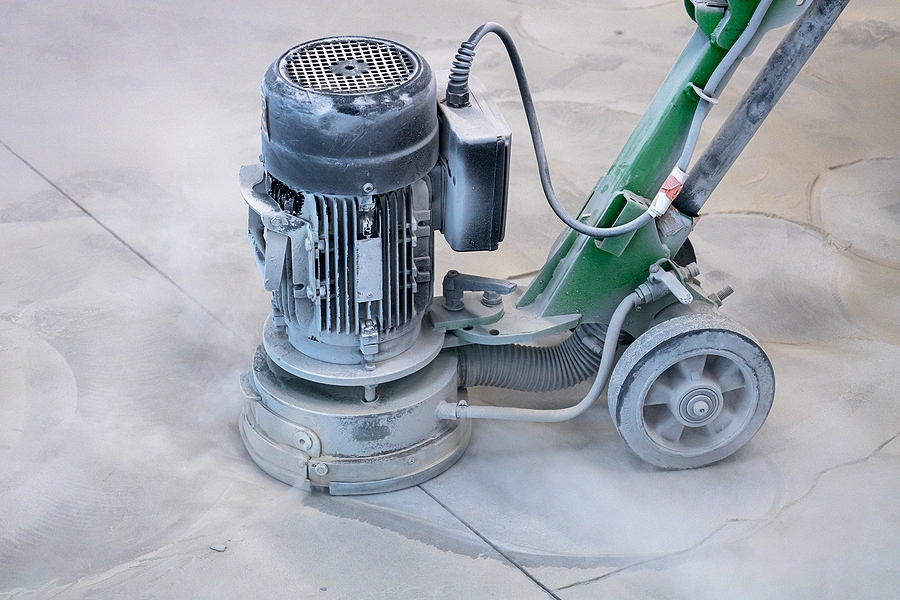
Dry grinding works by connecting the grinder to a dust collection system, which vacuums up airborne dust. Wet grinding patterns work by introducing water to the grinding surface. The water helps cool diamond tooling and minimize dust. As a result of adding water to the surface, a slurry is created from water, concrete particles, and other contaminants.
Wet grinding can be used to:
- Prepare concrete surfaces
- Polish concrete
- Remove adhesives
- Strip coatings
- Refine surface texture
- Limit dust
When done correctly, wet grinding can create a surface suitable for most flooring types.
Is Wet Grinding Safe Before Epoxy?
Yes, when given adequate drying time and cleaning, wet grinding can be safely done before epoxy coating installation. Epoxy problems are not caused by the grinding process. Problems arise when moisture and slurry remain in or on the concrete when the epoxy coating is applied.
Epoxy coatings are designed to firmly bond to clean, prepared concrete. Anything that prevents adhesion can cause your coating to fail.
As long as the floor is dried, cleaned, and properly tested before epoxy installation, wet grinding can create a suitable substrate.
Why Are Some Contractors Against Wet Grinding?
It all comes down to moisture.
Concrete is porous and will absorb water when wet. If not given enough time to dry, water can get trapped under the epoxy coating.
Some possible results include:
- Blisters
- Bubbling
- Delamination
- Loss of adhesion
- Discoloration
- Longer curing times
Since moisture can cause major failures that may be costly to repair, many contractors don’t want to introduce any additional water to the substrate.
What Is Delamination?
Delamination is the separation of an epoxy coating from the concrete.
Instead of remaining attached to the concrete, sections of the coating lift, peel or pull away from the slab. Delamination is one of the more costly failures to repair.
Delamination can look like:
- Peeling edges
- Hollow sounds when tapped
- Bubbling of the coating
- Flaking sections
- Areas pulling away from the concrete
Delamination is typically caused by poor surface preparation, contamination, or moisture.
How Does Moisture Cause Delamination?
Moisture can affect adhesion in a few ways. =Trapped water can cause vapor pressure to build under the coating. As moisture works its way out, it can cause the coating to lift from the concrete.
Additional problems caused by moisture:
- Can affect curing times
- Can prevent coatings from adhering
- Create blisters
- Lead to discoloration
- Cause long-term issues
Does Wet Grinding Leave a Residue?
Yes, wet grinding leaves behind a residue known as slurry.
Slurry is made up of the fine concrete particles that are created during the grinding process. It will also contain contaminants, coatings, adhesives, or anything else that is ground off of the concrete.
Slurry left on the concrete creates a barrier between the concrete and epoxy. This barrier will inhibit epoxy from penetrating the concrete and reduce overall adhesion.
Just as it sounds, residue can cause problems. For this reason, professional contractors take extra care to remove all traces of slurry before applying a coating.
How Long Should You Allow Concrete To Dry After Wet Grinding?
There is no exact time for all projects.
Each slab is different and will depend on many factors including:
- Concrete density
- Humidity levels
- Temperature
- Air flow
- Thickness
- How much water was used during grinding
Some projects may only require a couple of days to dry. Others, like those in more humid areas, can take much longer.
Most professional contractors wait to install epoxy until they can verify the slab is dry through testing.
Is Moisture Testing Necessary After Wet Grinding?
Yes, just as important as dry-grinding your concrete before epoxy application is moisture testing after wet grinding or pressure washing.
Your floor may feel dry to the touch, but there could be moisture trapped underneath the surface. Moisture testing will allow you to determine if your concrete is ready to be coated.
Things that moisture testing can determine:
- Too much moisture inside the slab
- If there will be vapor transmission problems
- Determine if the coating will properly adhere
- Identify areas that need more drying time
Failing to test for moisture can lead to delamination and other costly problems.
Should I Wet or Dry Grind My Concrete?
Hiring a professional to prepare your concrete ensures the best possible outcome.
Concrete preparation goes far beyond grinding a floor. Pros will check for moisture issues, test for contaminants, verify you have the correct surface profile, and more.
Experienced contractors know how to handle issues that can arise from both wet and dry grinding.
Professional preparation can mean the difference between a floor that lasts and one that fails within months.
Is Wet Grinding Safe Before Epoxy?
As long as your concrete is cleaned, dried, and tested for moisture, wet grinding can be perfectly safe before epoxy coatings.
The grinding process doesn’t cause delamination. However, leaving slurry and moisture on the floor can increase the chances of delamination.
Whether you wet-ground or dry-ground your concrete, proper preparation is the best way to avoid delamination.
At Custom Concrete Prep and Polish, we offer concrete surface preparation, grinding, moisture testing, and professional epoxy floors. If you ask yourself. Contact us today to learn how we can help prepare your floors for long-term durability.