If you’re planning a concrete project, one of the first questions that comes up is typically, “How long does it take to dry?” It sounds straightforward, but the answer isn’t as quick as most people expect.
Concrete doesn’t just “dry” like paint or wood stain. What’s actually happening is a chemical process that takes time, and understanding that process can make a big difference in how your project turns out.
Whether you’re pouring a driveway, patio, or slab, knowing what to expect helps you avoid common mistakes and get better long-term results.
Concrete Drying Time
Here’s the quick breakdown:
- Concrete sets in about 24 to 48 hours
- You can usually walk on it after 24 hours
- It reaches about 70% strength in 7 days
- It fully cures in about 28 days
That’s the timeline most professionals work with. But there’s a lot more going on behind the scenes.
Drying vs Curing: Why the Difference Matters
This is where most confusion starts. People say “drying,” but concrete doesn’t really dry in the traditional sense. Instead, it cures.
Drying means moisture evaporates. Curing is a chemical reaction between cement and water that causes the material to harden and gain strength over time.
If concrete dries too quickly, it can actually weaken the structure. That’s why controlling moisture during the early stages is so important.
Think of it this way: you don’t want concrete to dry fast; you want it to cure properly.
What Happens Right After Concrete Is Poured?
Once concrete is poured, the clock starts immediately.
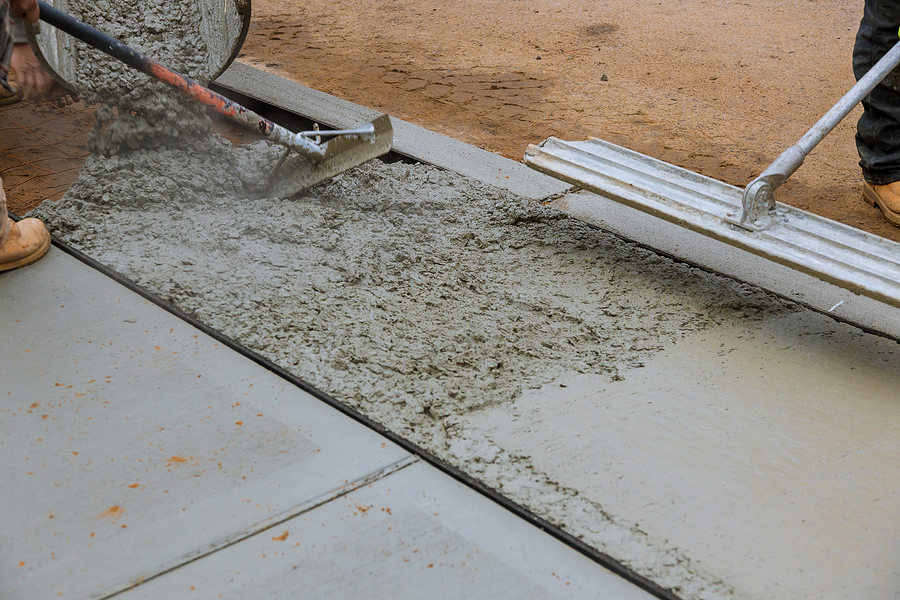
At first, the mixture is fluid and workable. This is when it’s shaped, leveled, and finished. Within a few hours, it begins to stiffen. This stage is called the initial set, and it’s when the surface starts to hold its form.
Over the next 24 to 48 hours, the concrete continues to harden. This is when it becomes firm enough to walk on, although it’s still far from fully cured.
From there, the curing process continues gradually, building strength day by day.
When Can You Walk on Concrete?
In most cases, you can walk on concrete after about 24 hours.
That doesn’t mean it’s fully ready for use, though. It’s still relatively fragile at this stage, so it’s best to limit foot traffic and avoid dragging heavy objects across the surface.
If the weather is cooler or more humid, it may take closer to 48 hours before it’s safe to walk on. On the flip side, warm conditions can speed things up slightly, but not enough to skip precautions.
When Can You Drive on Concrete?
Driving on new concrete requires more patience.
For residential driveways, you’ll typically want to wait at least 7 days before parking a vehicle on the surface. Even then, it’s best to avoid heavy trucks or equipment for a bit longer.
By the 7-day mark, concrete has gained most of its usable strength, but it’s still not at 100%. Waiting for the full curing period helps ensure long-term durability and prevents damage like cracking or surface wear.
The 28-Day Rule Explained.
You’ll hear contractors talk about the “28-day cure” all the time, and there’s a reason for that.
Concrete reaches its full design strength at around 28 days under normal conditions. This is the standard used in construction for testing and performance.
That doesn’t mean nothing happens after 28 days. Concrete can continue to gain strength slowly over time, but most of the critical hardening occurs within that first month.
If you’re planning anything heavy-duty, like placing large structures or equipment, this timeline matters.
Factors That Affect Drying and Curing Time
Not all concrete cures at the same rate. Several factors can speed things up or slow them down, and understanding them helps you plan more effectively.
Weather Conditions
Temperature and humidity play a big role. Warm weather tends to accelerate curing, while cold weather slows it down. Extremely hot conditions can cause the surface to dry too quickly, leading to cracking.
Humidity also matters. High humidity helps retain moisture, which is good for curing. Dry air can pull moisture out too fast, weakening the surface.
Thickness of the Concrete
Thicker slabs take longer to cure than thinner ones. A standard sidewalk will cure faster than a thick foundation slab simply because there’s less material to harden.
Type of Mix Used
Different concrete mixes are designed for different purposes. Some include additives that speed up curing, while others are formulated for strength and durability over a longer period.
Fast-setting concrete can harden more quickly, but it still requires proper curing to reach full strength.
Water Content
The amount of water in the mix directly affects curing time and strength. Too much water can weaken the final product, while too little can make it difficult to work with and prevent proper hydration.
This balance is one of the most important parts of a successful concrete installation.
Why Curing Matters More Than Speed
It’s tempting to want concrete to dry as fast as possible, especially if you’re eager to use the space. But rushing the process can lead to problems down the line.
Proper curing allows the concrete to develop its full strength and durability. It reduces the risk of cracking, improves wear resistance, and helps the surface last longer.
In other words, patience pays off.
How Professionals Control the Curing Process
Experienced contractors don’t just pour concrete and walk away. They actively manage the curing process to get the best results.
Common Curing Methods
- Keeping the surface moist with water
- Covering it with plastic sheeting
- Using curing compounds to lock in moisture
- Protecting it from direct sunlight and wind
These methods help prevent moisture from evaporating too quickly, which is critical during the early stages.
What Happens If Concrete Dries Too Fast?
When concrete loses moisture too quickly, it can lead to several issues.
The most common problem is cracking. Rapid drying causes the surface to shrink faster than the underlying material, creating stress that leads to cracking.
It can also weaken the overall structure, making it less durable over time. In severe cases, improper curing can lead to surface scaling or flaking.
That’s why controlling the environment during the first few days is so important.
Cold Weather vs Hot Weather Curing
Temperature extremes can complicate the curing process.
In cold weather, the chemical reaction slows down. If temperatures drop too low, curing can stop altogether, compromising strength.
In hot weather, the opposite happens. The surface can dry too quickly, increasing the risk of cracking and weakening the finish.
Professionals adjust their approach based on conditions, using different techniques to maintain proper curing regardless of the weather.
How to Tell If Concrete Is Fully Cured
Concrete doesn’t come with a visible indicator that says it’s fully cured. Instead, it’s measured by time and strength development.
After 28 days, most concrete has reached its intended strength. At that point, it’s considered fully cured for practical purposes.
If you’re unsure, it’s always best to err on the side of caution and give it more time, especially for high-load applications.
Common Mistakes to Avoid
Even simple mistakes can impact how well the concrete cures. Here are a few to watch out for:
- Walking or driving on it too soon
- Letting it dry out too quickly
- Skipping proper curing methods
- Using the wrong mix for the job
Avoiding these issues helps ensure your concrete performs the way it should.
Does Sealing Affect Drying Time?
Sealing doesn’t change the curing timeline, but it does help protect the finished surface.
Most concrete should be sealed after it has fully cured. Applying a sealer too early can trap moisture and interfere with the curing process.
Once cured, sealing helps protect against stains, moisture, and wear, extending the life of the surface.
Can You Speed Up Concrete Drying Time?
This is one of the most common questions people ask, especially when they’re on a tight schedule. The short answer is yes, you can influence how quickly concrete sets—but there’s a right way and a wrong way to do it.
Certain additives, often called accelerators, can be mixed into the concrete to help it set faster. These are commonly used in colder weather or when a project needs to move quickly. Adjusting the mix design or using specialized products can also reduce initial set time.
But here’s where people get into trouble. Speeding up the process too much can compromise strength and durability. Concrete needs time to properly hydrate, and rushing the process can lead to weaker surfaces, cracking, or premature wear.
Environmental control is a safer way to influence timing. For example, working in warmer temperatures or protecting the surface from excess moisture can help the process proceed more efficiently without sacrificing quality. The key is balance; faster isn’t always better when it comes to concrete.
How Weather Impacts Concrete Drying and Curing
Weather plays a bigger role in concrete performance than most people realize. The same mix can behave very differently depending on the conditions it’s exposed to.
In hot weather, concrete can appear to dry quickly, but that’s often just surface moisture evaporating. If it dries too fast, it can lead to shrinkage cracks and a weaker overall structure. That’s why professionals take steps to slow down evaporation, like shading the area or applying curing compounds.
Cold weather creates the opposite challenge. The chemical reaction that allows concrete to harden slows down significantly in low temperatures. If it gets too cold, especially near freezing, the curing process can stall or even fail. In those cases, contractors may use heated enclosures, insulated blankets, or specialized mixes designed for cold conditions.
Rain and humidity also come into play. High humidity can actually help with curing by keeping moisture in the concrete longer, while heavy rain can damage the surface if it hits before the concrete has set.
Understanding how the weather affects concrete helps you plan better and avoid unexpected issues during your project.
What Happens After Concrete Fully Cures?
Once concrete reaches the 28-day mark, it’s considered fully cured for most practical purposes. At this point, it has developed the strength it was designed to achieve, and it’s ready for regular use.
But that doesn’t mean your job is done.
After curing, maintenance becomes the focus. Sealing the surface is one of the most important steps you can take. A good sealer protects against moisture, stains, and everyday wear, especially in high-traffic areas like driveways and patios.
You may also start to notice small changes over time. Hairline cracks can appear, surfaces can fade slightly, and exposure to the elements can take a toll. These are normal and can often be managed with routine care and occasional touch-ups.
For polished or decorative concrete, ongoing maintenance is even more important. Regular cleaning and periodic resealing help preserve the appearance and keep the surface looking its best.
The takeaway is simple: curing gets your concrete to full strength, but proper maintenance is what keeps it performing and looking good for years to come.
Why Professional Installation Makes a Difference
Concrete might seem simple, but there’s a lot that goes into doing it right.
From selecting the correct mix to managing the curing process, every step matters. Small mistakes can lead to long-term problems, which is why professional installation is often worth the investment.
Experienced contractors understand how to work with environmental conditions, control moisture, and ensure the final product meets performance expectations.
How Long Does Concrete Take to Dry?
So, how long does concrete take to dry?
The short answer is that it sets within a day or two, becomes usable within a week, and fully cures in about 28 days. But the real takeaway is that curing, not drying, is what determines the strength and durability of your concrete.
Rushing the process can lead to cracks, weakness, and costly repairs. Giving it the time it needs ensures a lasting surface.
If you’re planning a concrete project and want results that hold up over time, working with professionals who understand the full process is key. Contact Concrete Polish & Prep to learn more about expert concrete preparation, polishing, and finishing services that are built to last.