
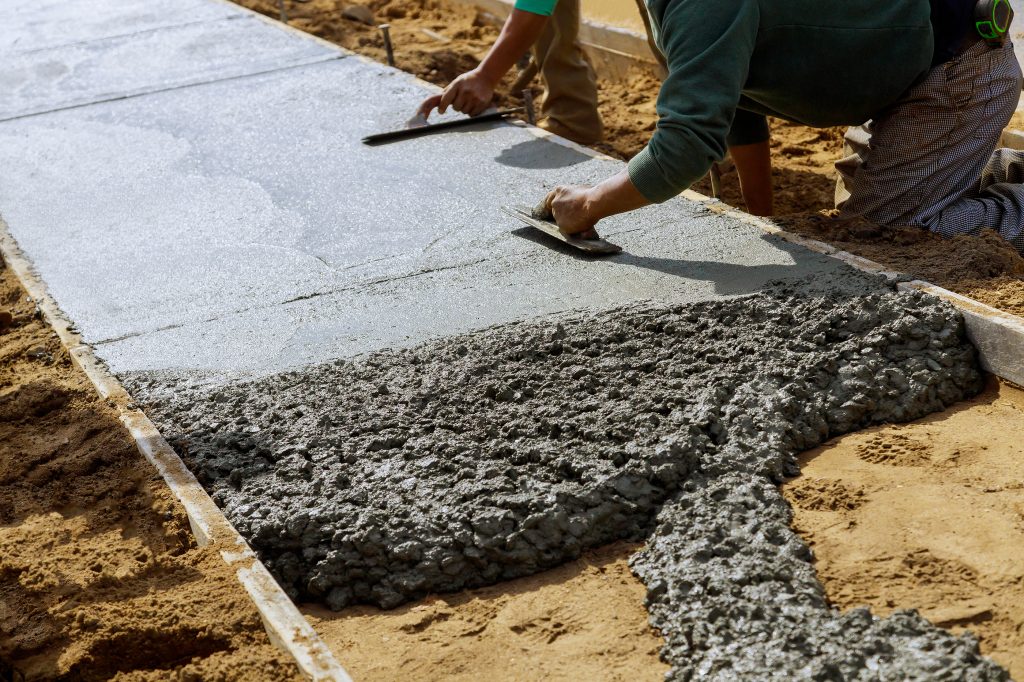
Fresh concrete looks solid pretty quickly. Within a few hours, it starts to firm up, and by the next day, it can seem ready to go. That is where a lot of people make mistakes.
Just because concrete looks hard does not mean it is ready for foot traffic.
Timing matters more than most people expect. Walking on concrete too early can leave marks, weaken the surface, or create long-term issues that are difficult to fix later. If you want the best results, it is important to understand how concrete cures and how long you should actually wait.
The Short Answer Most People Are Looking For
In most cases, you should wait at least 24 to 48 hours before walking on freshly poured concrete.
That is the general guideline for light foot traffic under normal conditions. By that point, the surface has usually hardened enough to support weight without leaving impressions.
That said, this is not a one-size-fits-all answer. Several factors can change that timeline, including weather conditions, the type of concrete used, and how the surface is finished.
Why Concrete Needs Time to Cure
Concrete does not dry the way other materials do. It cures through a chemical process called hydration, where water reacts with cement to form a solid structure.
This process continues long after the surface feels hard. In fact, concrete continues to gain strength for weeks after it is poured.
Walking on it too soon can interrupt that process. Even if you do not see immediate damage, early traffic can weaken the surface and affect long-term durability.
Giving concrete enough time to cure properly is one of the simplest ways to ensure it holds up over time.
What Happens If You Walk on It Too Soon
It can be tempting to test the surface early, especially if it looks ready. The problem is that the concrete beneath the surface may still be soft.
Walking on it too soon can cause:
- Footprints or surface indentations
- Uneven areas that affect the finish
- Small cracks that develop over time
- Reduced overall strength in high-traffic areas
In some cases, the damage is visible right away. In others, it shows up later, as the surface wears down faster than expected.
Either way, it is something you want to avoid.
How Weather Affects the Timeline
Temperature and weather conditions play a major role in how quickly concrete cures.
Warm weather speeds up the curing process, which can make the surface feel ready sooner. Cold weather slows everything down, meaning you may need to wait longer before it is safe to walk on.
Humidity also plays a role. Dry conditions can cause moisture to evaporate too quickly, while very humid conditions can slow the process.
That is why it is important to consider the environment, not just the clock. A 24-hour wait might be enough on a warm day, but not nearly enough in colder conditions.
Different Surfaces, Different Timelines
Not all concrete surfaces are the same. The thickness of the slab and the type of finish both affect how long you should wait.
A thin sidewalk may be ready for light foot traffic sooner than a thicker driveway or patio. Decorative finishes, such as stamped or polished concrete, often require extra care during the early stages.
These surfaces are more sensitive to damage while curing, so waiting a bit longer can help protect the final appearance.
When Is It Safe for More Than Foot Traffic
Walking is just the first step. Heavier use requires more time.
Concrete typically needs about seven days before it can handle heavier loads like furniture or equipment. For vehicles, the standard recommendation is to wait at least 28 days.
That 28-day mark is when concrete reaches most of its full strength. Using it too soon for heavy loads can lead to cracks or surface damage that is difficult to repair.
Patience during this stage pays off in the long run.
Signs That Concrete Is Ready
While timing is important, there are also a few signs that can help you gauge when the surface is ready for light use.
The color should appear more consistent, without darker patches that indicate excess moisture. The surface should feel firm under light pressure, without leaving marks.
Even with these signs, it is still best to follow general time guidelines rather than relying on appearance alone.
Why Waiting Is Always Worth It
Waiting a little longer might feel inconvenient, especially if the area is part of your daily routine. But cutting that time short can create problems that are far more inconvenient to deal with later.
Concrete is designed to last for years, sometimes decades. Giving it an extra day or two at the beginning is a small step that helps protect that long-term performance.
In most cases, the safest approach is to give it more time than you think it needs.
The Bottom Line
For most projects, waiting 24 to 48 hours before walking on concrete is a good rule of thumb. From there, it continues to gain strength, with full durability developing over several weeks.
Weather conditions, surface type, and overall project size can all influence the timeline, so it is important to consider the full picture.
If you are ever unsure, waiting longer is always the safer choice.
If you want concrete that not only looks good but also holds up over time, proper curing is just one piece of the puzzle. Custom Concrete Prep & Polish has the experience to handle every stage of the process correctly. Reach out today to get results you can count on from day one.