Installing a basement floor coating is a great way to enhance the appearance, durability, and performance of your concrete floor. Whether you want a decorative epoxy coating, a polyaspartic system, or another protective finish, preparation is always key.
Many basement floor coating failures result from the installer not grinding the concrete sufficiently before applying the coating. Homeowners love to focus on the coating but ignore the need for grinding. That’s why we get asked so often how much grinding is needed before applying a basement floor coating.
The exact amount of grinding will vary based on several factors, including the condition of your concrete and the type of floor coating installed. However, one fact remains true. Proper grinding is almost always necessary to guarantee a long-lasting basement floor coating.
Let’s go over some of the reasons why grinding is so important and what factors can impact how much you need.
Why Grinding Is Needed Before Basement Floor Coatings
You might be wondering why grinding is so crucial before applying a basement floor coating. After all, your floor might look smooth and clean to the naked eye.
However, paint residue, curing compounds, old adhesives, sealers, oils, dirt, and other contaminants can prevent coatings from adhering correctly to your concrete slab.
That’s why professional contractors grind floors before coatings are applied. Grinding removes these invisible contaminants and creates a rough surface profile for coatings to adhere to.
Failure to grind your basement floor before installing a coating can lead to premature failure.
Light Grinding Is Usually Enough
Many homeowners hear the word “grinding” and automatically think the concrete contractor is going to remove inches of concrete from their floor. That is almost never the case.
Most of the time, grinding is performed to open the pores in the concrete and create sufficient profile for coatings to adhere. In many instances, floor prep contractors are only removing a thin layer of the concrete’s surface.
They are removing surface-level contaminants and opening the concrete’s pores. Very little concrete is typically removed during the grinding process.
Older Floors Might Require More Grinding
Every concrete floor is different and will require varying amounts of grinding. Some floors may never have been painted or coated, so light grinding will be enough.
However, if your floor has failed coatings, cracks, stains, or other defects, you may need to grind more aggressively to address them.
Variables that may change how much you need to grind include:
- Existing coatings
- Old adhesive residue
- Surface contamination
- Concrete hardness
- Moisture issues
- Previous repairs
If you have an existing basement floor coating that is failing or flaking, more grinding will be required. The contractors will need to remove the existing coating before applying a new floor coating.
Some coatings can be removed easily, while others may require more effort to remove.
Again, too much or too little grinding can cause problems, so it is best to leave this task to a professional.
Surface Profile is Important
When preparing a floor for coating, you must create a surface profile (CSP). A surface profile is the texture of the concrete after it’s been ground.
Different coatings require different surface profiles to adhere properly. Some coatings require a lighter profile while others need a heavier profile.
Floor contractors don’t really focus on how much concrete is being removed. They pay more attention to creating the right surface profile needed for the coating being applied.
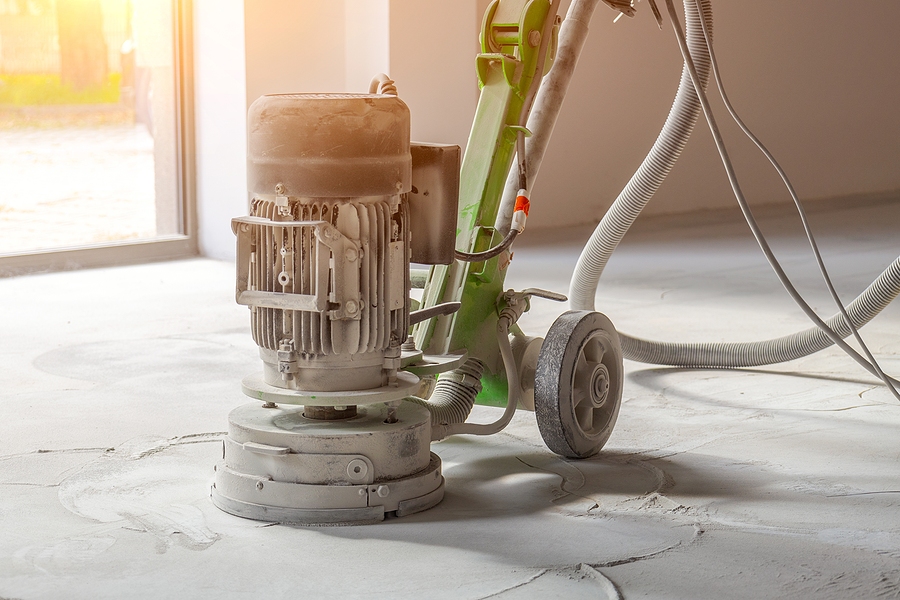
The grinding equipment and the attached discs create this profile.
You Also Have to Fix Cracks and Chips
If your concrete has cracks or other issues, they will have to be fixed before applying your new coating. These problems will be easily identified when the surface is ground.
After your floor is ground and the proper surface profile is created, your contractor can fill in these cracks and chips with a patching compound. They will then re-grind these areas to blend with the rest of your floor.
Doing this will ensure your coating doesn’t pick up on these cracks and chips, and you’ll have a smooth floor.
Don’t Acid Etch Your Basement Floor
Some people like to acid wash their basement floors before applying a coating. While this was popular years ago, it’s no longer recommended.
Professional contractors like to grind your basement floor because you can see exactly what you are doing. You can expose clean concrete across your entire slab.
Grinding also allows you to remove all the contaminants from your floor. Acid washing won’t remove old coatings, adhesives, or many surface contaminants.
Do not acid-wash your floor if you plan to apply a basement floor coating.
Grind to Check for Moisture Issues
Basements are prone to moisture problems. If moisture is migrating through your concrete, you will need to address it before applying a coating.
Many times, floor contractors can identify potential moisture problems while grinding your floor. They will know if your floor needs to be evaluated for moisture problems.
Surface preparation will not fix moisture problems. It’s best to identify active moisture issues before they ruin your new floor coating.
That’s why many professionals recommend moisture testing before applying basement floor coatings.
Don’t Rent a Grinder
If you’re thinking about renting a grinder to prep your own basement floor, let us stop you right there. While we understand the desire to save money, rental grinders don’t deliver professional results.
Professional-grade grinders are heavier, which allows you to grind more concrete in less time. The grinding discs are also more precise and remove top coat material more consistently.
Another benefit of hiring a professional floor coating contractor is they have years of experience grinding concrete.
They know what to look for if your floor is pulling up too much or too little material. Trust a professional to prep your basement floor.
Find the Perfect Amount of Grinding For You
How much grinding is needed before basement floor coatings? As you can see, there is no simple answer. Each floor will be different depending on your concrete’s condition.
Some floors will need very little grinding while others will need more. Just remember that coating contractors don’t aim to grind off a certain amount of concrete from your floor.
They grind until they expose clean, solid concrete and reach the required surface profile needed for the coating.
Contact Custom Concrete Prep & Polish
If you want a beautiful basement floor that lasts for years to come, you need to start with a good foundation. That foundation starts with preparing your concrete floor.
Custom Concrete Prep & Polish can evaluate your floor and let you know what needs to be done before applying a coating. We offer professional concrete preparation services in the St. Cloud and Central Florida areas.
Contact us today to learn more about our concrete preparation services or to schedule your free consultation.