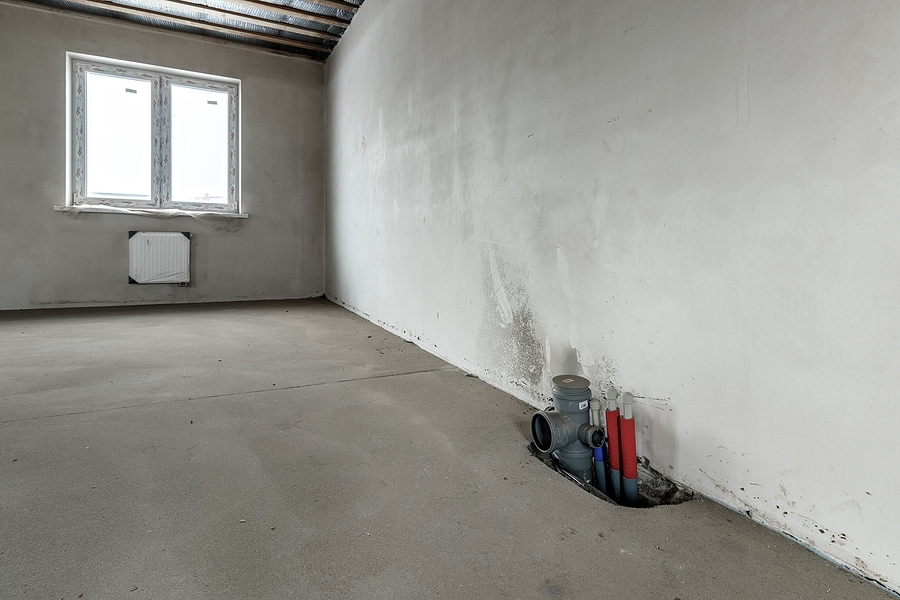
Basement floors can acquire all sorts of defects. Minor surface spalls, shallow depressions, chips, adhesive-removal scrapes, and hairline cracks can prevent a floor from being smooth and level enough for new flooring. When these imperfections are fairly shallow, many people believe any product will work.
That’s not true.
Thin repairs are tricky. Many repair materials will fail prematurely if not applied to sufficient depth. Using the wrong repair material can cause future floor-preparation issues and affect the performance of finished flooring.
So what works best for thin basement floor patches? Let’s take a closer look.
Why Thin Repairs Are More Challenging Than Deep Repairs
Some people think thin repairs are easier than larger repairs. Thin repairs can actually be more challenging. There is less room to develop a strong bond with surrounding concrete when products are applied at shallow depths.
Repair products used on thin applications are more prone to:
- Cracking
- Edge lifting
- Delamination
- Shrinkage
- Surface failure
Selecting repair material is critical when working with thin repairs.
If a product is designed for thicker applications, it may not feather properly into existing concrete. It may also lack enough strength at low depths.
That is why it is so important to match the right repair materials to the conditions of each floor. Professional floor preparation contractors don’t just fill in the holes. They evaluate the floor.
Understanding the Cause of the Damage
Figuring out why damage occurred is an important step in the repair process.
Some basement floor issues are purely cosmetic. But others can be caused by moisture problems, settlement, flooring removal, or concrete deterioration. Simply patching these areas will allow the issue to continue over time.
Moisture can degrade repair materials. Movement can cause new cracks to develop. Poor surface prep can limit bonding power.
Addressing the cause of the damage is typically recommended before beginning any patching work.
Cement-Based Patch Products
Many thin basement floor repairs can be successfully fixed using a cement-based patch product.
Concrete patch products are made to adhere to existing concrete. Most can be applied in very thin layers and still offer exceptional durability. Cement-based patch products are also typically easy to feather out to an almost undetectable edge.
These products work well for filling:
- Small spalls
- Shallow depression
- Surface gouges
- Scraped adhesive residue
- Minor floor defects
Thin concrete floor repairs usually fare much better when cement-based patch products are used instead of standard concrete mixes.
Why Standard Concrete Mix Is Usually a Poor Choice
Homeowners will sometimes try to fill in thin repairs using regular concrete mix (you know, the kind you buy in bags at the hardware store). Unfortunately, it usually doesn’t work very well.
Most bagged concrete mixes have large aggregate. They are intended for use at greater depths. Using a standard concrete mix for thin patches can lead to poor bond and difficulty feathering the patch material into the existing concrete.
Typically, edges will be weak and prone to failure. Instead of fixing the problem, it might actually cause more issues down the road.
Standard concrete works great for thicker repairs. But for thin areas, it is usually not recommended.
Polymer-Modified Repair Products
Many of the best concrete patch products use polymer technology.
Polymer-modified patch and repair products can have many advantages. They often increase flexibility. They can improve bonding power. Some reduce shrinkage. And many resist cracking.
Polymer-modified repair materials are great for basement floors. They typically hold up better to moisture, temperature variations, and slight structural movement.
Almost any flooring can be installed over polymer-modified repair products. They’re frequently used when long-lasting repairs are desired, or when finished flooring will be installed on top.
Polymer-modified products are one of the best options for thin concrete patches.
Self-Leveling Products Are Not Always Patch Materials
Self-leveling underlayment can help fix many floor problems. But it’s not ideal for every repair.
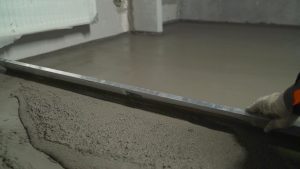
Self-leveling underlayment is excellent for major floor repairs. Using a self-leveling product for a small chip or shallow depression is typically not recommended. Patch products work just as well for these types of repairs and are usually much easier to apply.
Self-leveling is best when larger areas of the floor need to be leveled or smoothed out.
Patching products and self-leveling products were designed for different purposes. Knowing the difference will help you select the right product for patching basement floors.
Surface Preparation is Very Important
No repair material can bond well to a dirty floor.
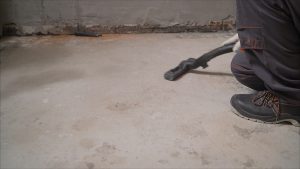
Typically, patching areas of a concrete floor will need to be cleaned and mechanically prepared before application. Dust, old adhesives, other coatings, paint, grease, and loose concrete are enemies of bonding. If not removed, patch materials will not adhere to the concrete as well.
It’s not uncommon for professional contractors to grind down the damaged area. This allows new repair materials to achieve maximum bond strength.
Don’t overlook the importance of floor preparation. Professional results are usually due as much to preparation as to the repair product used.
Your Flooring Plans Matter
Do you plan on installing carpet, tile, hardwood, or polished concrete?
The flooring you intend to install over your repair often determines which patch product you should use.
Every flooring type has different substrate requirements. Certain repair materials may work great under one type of flooring but not another.
Large format tiles often require extremely flat floors. Rugs and carpet can hide many issues, but luxury vinyl planks can see right through them. If you plan on polishing your concrete, some patch products may be more suitable than others.
Think about what you want to put on your floor before patching.
Why a Professional Evaluation Is Helpful
So what works best for thin basement floor patches?
There is no one-size-fits-all solution. Every repair is different. Many factors should be considered before deciding which repair material to use.
A professional floor prep company will consider the depth of the repair, the slab’s moisture conditions, and many other variables. Then they’ll recommend a repair product based on the job’s specific needs.
Instead of simply patching concrete, professional contractors aim to provide long-lasting solutions for their customers.
The Right Product … For Your Repair
Now back to the question. What works best for thin patches on basement floors?
Often, a polymer-modified cement-based patch product offers the best performance. But every floor repair is different. Conditions vary from one basement to the next.
The key to successful concrete repair is finding the right product for the project’s conditions. Also understand why the damage occurred, properly prepare the floor, and choose a repair material that works well with your planned flooring.
Trust the Experts at Custom Concrete Prep & Polish
Here at Custom Concrete Prep & Polish, we do these types of repairs all day long. We have trained professionals who can inspect your floor and help you decide which material works best for creating a smooth, durable surface.
If your basement floor has concrete defects you would like patched, give Custom Concrete Prep & Polish a call. We can make your floors better than ever!
Contact us today to learn how Custom Concrete Prep & Polish can help you prep, repair, or polish your concrete floors.