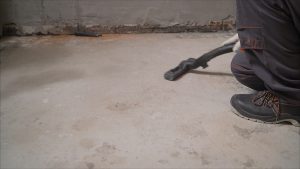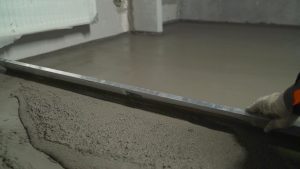
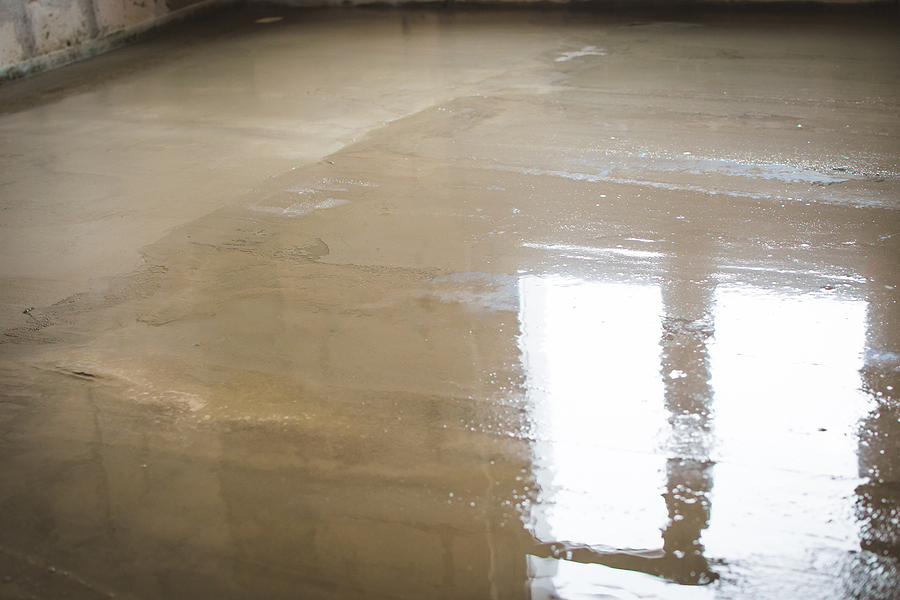
Self-leveling underlayment is becoming increasingly popular for working with uneven concrete floors prior to installing tile, hardwood flooring, luxury vinyl plank, carpet, polished concrete, and many other flooring types. Self-leveling underlayment helps to create a smoother floor, meet flooring manufacturer requirements, and can solve all types of slab problems.
One question we commonly get asked on almost every floor prep job we do is: should self-leveling underlayment be poured over the entire floor or just in low spots?
The answer really depends on a variety of factors, including the condition of the slab, type of flooring being installed, flatness tolerances of the finished floor, and the goals of the project. While there are times where the floor will need to be fully poured, most floors can achieve fantastic results by just pouring in the low spots.
Let’s take a closer look at some of the differences.
What Does Self-Leveling Underlayment Do?
Before we jump into the low-spots vs. whole-floor applications of self-leveling underlayment, it’s important to understand exactly what it does. Self-leveling underlayment is a cement-based product designed to flow across a prepared concrete floor and fill low spots. When installed properly, self-leveling underlayment can help create a much smoother and flatter floor.
Self-leveling underlayment is not a magic product that will fix every floor. It requires proper floor preparation, proper mixing, and proper installation. More importantly, it should be used strategically depending on the condition of your concrete slab.
Not Every Floor Needs A Full-Pour Of Self-Leveling Underlayment
When many homeowners and contractors consider using self-leveling underlayment, they automatically assume the entire floor must be poured. This is not always necessary.
If your concrete slab is already fairly flat and there are only a few minor low areas, you may be able to simply fill in those spots for a fraction of the cost. By pouring self-leveling underlayment over the entire floor, you are increasing the amount of material needed and the labor and installation time. There are even cases where adding self-leveling underlayment over the entire floor can create floor-height issues with door clearances, transitions, cabinets, and appliances.
Most floors can achieve great results with just spot-pouring low areas.
When To Spot Pour Self-Leveling Underlayment
Spot pouring self-leveling underlayment is typically used when there are only a few isolated low areas and most of the slab meets flatness specifications. By using this method, the contractor can identify where the floor dips and apply self-leveling material only to those areas. Spot pouring self-leveling underlayment allows you to achieve the flatness you need while using less material.
Spot pouring is typically done when:
- Low areas are isolated to certain areas of the floor.
- Most of the floor is already within flatness specifications.
- The variation in floor height is not drastic.
- Floor height is a concern.
- You’re working with a limited budget.
As you can see, by spot pouring self-leveling underlayment, you save money by not having to cover the entire floor. But when done properly, you can still achieve a level floor.
When To Pour Self-Leveling Underlayment Over The Entire Floor
There will be times when you should pour self-leveling material over the entire floor surface. If your slab has multiple low spots, surface waves, or numerous elevation changes across the floor, spot repairing these areas can become very time-consuming. While you could grind out each of these areas individually, it may actually take longer than just pouring the entire floor.
You should pour self-leveling underlayment over the entire floor when:
- There are numerous low spots spread across the floor.
- Large areas of the floor need to be corrected.
- The flooring you are installing requires very tight flatness tolerances.
- The surface of the concrete slab varies too much.
- You want a uniform coat of underlayment applied to the floor.
Installing Self-Leveling Underlayment Over The Entire Floor vs Spot Repairing Low Areas
As you will notice from the two lists above, one of the biggest factors in deciding whether to spot-repair low areas or pour self-leveling underlayment over the entire floor is the type of flooring you will be installing. All flooring products have different flatness specifications they must meet, and some are more tolerant than others.
For instance, carpet can usually flex over minor inconsistencies in the subfloor. Luxury vinyl plank, hardwood floors, and large format tile usually have tighter specifications. Large-format tile is extremely picky about floor flatness; if the floor is not flat enough, the tiles will show obvious lippage.
If the flooring you’re installing has strict guidelines, your contractor may recommend pouring self-leveling underlayment over the entire floor.
Find High Spots Before Pouring Self-Leveling Underlayment
One problem that can occur when prepping floors is contractors focusing too much on the low spots and not enough on the high spots. All high spots should be identified before any self-leveling underlayment is installed.
Often, you can grind down high spots to reduce the amount of self-leveling underlayment needed to cover the entire floor. By grinding the floor first, you won’t have to raise the floor as high to meet flatness requirements. This can save you money and help with any floor height issues.
Adding self-leveling underlayment to your floor will increase its height. If you pour it over the entire surface, this can add a significant amount of height. Doorways, transitions, stairs, appliances, and cabinets can all be affected by higher floors.
Self-Leveling Underlayment Cost To Spot Pour Versus Entire Floor
The cost to have your floor prepared will vary depending on whether you choose to spot-pour the low areas or pour the entire floor. Self-leveling underlayment isn’t cheap. Using it to cover an entire floor will cost significantly more than just pouring in the low spots. You’ll also likely pay more for labor because there is more prep work, mixing, pouring, and finishing to do.
Just because your floors need self-leveling underlayment doesn’t mean you need to have it poured over the entire surface. However, there are some instances where it’s needed.
Have Your Floor Evaluated To Determine If Self-Leveling Is Needed
Every concrete slab floor is different. Just because your floor looks like it needs a full-floor application of self-leveling underlayment doesn’t mean that’s what it needs. There may be only a few low spots to fill, or your floor may not need any self-leveling underlayment at all. A professional flooring contractor will have the tools needed to properly evaluate your floors.
Contractors use straightedges, lasers, and floor mapping to help determine if the floors need a full-floor application of underlayment, just spot repairs, or if your floor doesn’t need any underlayment at all. Making this decision based on what you see could end up costing you unnecessary money.
Combine Multiple Floor Preparation Methods
In most cases, the floor will need a combination of floor preparation methods. High spots will be ground off of the floor. Self-leveling underlayment will then be used to fill any remaining low spots. Using a combination of methods will help reduce the amount of self-leveling underlayment you need.
Instead of using a single floor preparation method across the entire floor, treat each section as its own project. By doing this, you’ll not only end up with a nicer floor but also save yourself a bunch of money.
Do You Need To Spot-Pour Or Pour Over The Entire Floor? Contact Us
Should you spot-pour self-leveling underlayment, or pour it over the entire floor? That will all depend on the condition of your floor and what you plan to put on top of it. Some floors will need a full application, while others can use just spot repairs.
At Custom Concrete Prep & Polish, we look at every floor differently. Whether you need your floor ground, polished, or have self-leveling underlayment installed, we can help. If you’re wondering whether you need to spot-repair your floor or pour self-leveling underlayment over the entire surface, give us a call. We can help evaluate your floor and recommend the best solution for your flooring project. Contact us today.